
Supporting confidence after a bad mark
A practical guide for helping a child feel understood, learn from a disappointing result, and choose a useful next step.
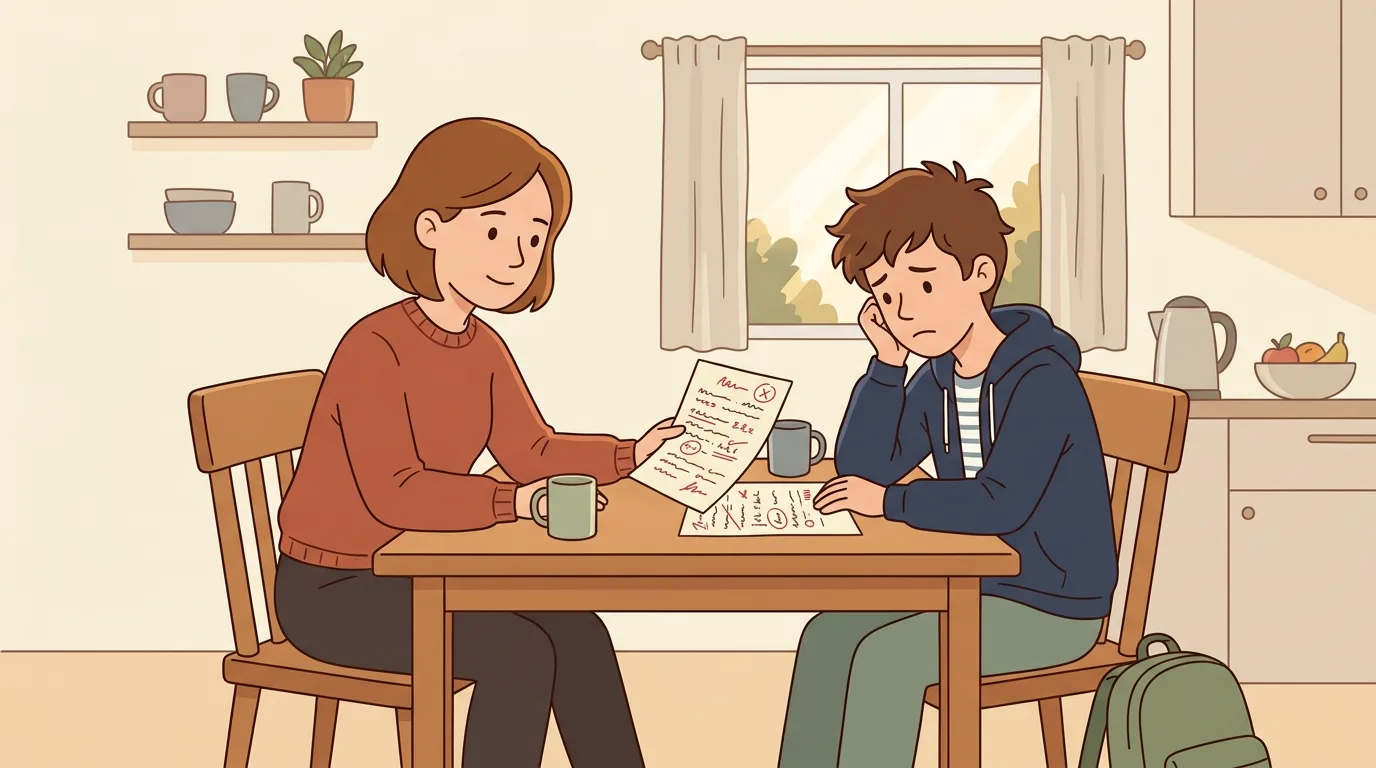
A disappointing result can feel very personal at first. The gentlest support gives a child time to feel known before the mark becomes something to understand together.
Start with the child in front of you
In the first few minutes after a bad mark, many children are watching your face more closely than they are watching the paper. They are trying to work out whether they are in trouble, whether you are disappointed in them, and whether this one result has changed how you see them. That is why the first sentence matters. "I can see this really hurt" is a very different opening from "What happened here?"
This does not mean pretending the mark is fine. It means letting the child stay human before the result becomes a project. Child development guidance often begins in this same place: listen, acknowledge the disappointment, and leave room for the child to tell the truth. A teenager who hears "that must feel awful after the work you put in" is more likely to stay in the room, and staying in the room is where every useful conversation begins.
Keep the mark from becoming a mirror
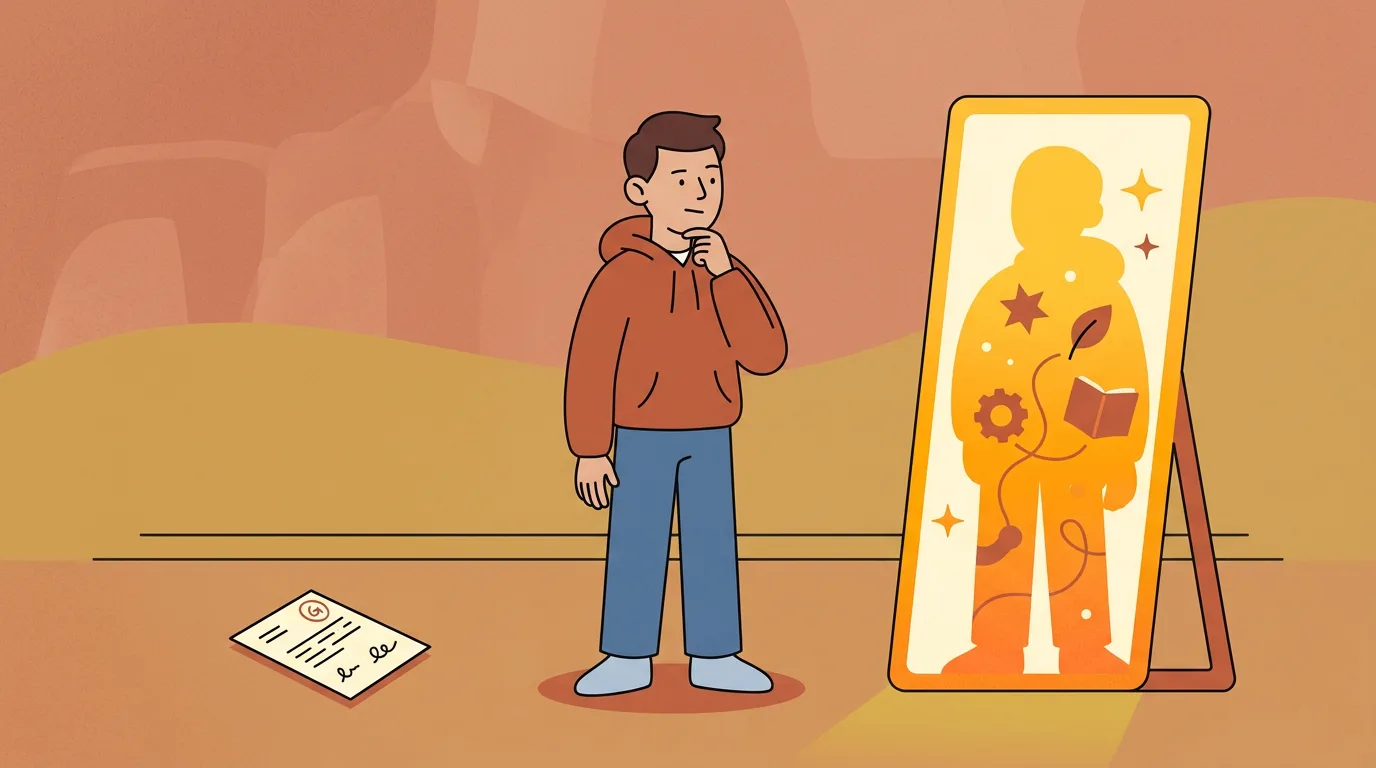
A bad result can be strangely persuasive. A child sees 42% at the top of the page and, almost instantly, turns it into "I am bad at maths" or "I am not one of the smart kids." Parents can gently shrink the mark back to its proper size. This was one task, on one day, under one set of conditions. It can tell you something useful, but it cannot tell you who your child is.
This is the quieter lesson inside growth mindset research. It is not simply "praise effort" and hope for the best. A child who studied badly for three hours does not need a medal for suffering. They need help noticing what the work now shows: which strategy held up, where the answer drifted, what kind of practice was missing. Stanford's summary of Carol Dweck's work makes that distinction clearly: praise tied to process can make perseverance feel possible, while praise or criticism tied to the person can make every setback feel like evidence.
Find the clue once the sting has passed
The most useful part of the feedback may not be visible while everyone is still raw. It might appear later, after dinner, when the paper is back on the table and the child is ready to look at one question without feeling swallowed by the whole result. Sometimes the opening is as small as "Which question still annoys you?" or "Was there a point where it stopped making sense?"
Feedback research points in the same direction, though parents do not need to speak like a marking rubric at the kitchen table. Hattie and Timperley describe effective feedback as helping a learner understand where they are going, how they are going, and where to next. Later meta-analytic work is similarly cautious about feedback aimed at the self, such as broad praise or broad criticism. In family life, the translation is simple: look for the clue. Maybe it is three algebra steps to redo, one teacher comment to unpack, or a mark scheme that finally explains what the question was asking for.
Stay close without taking the steering wheel
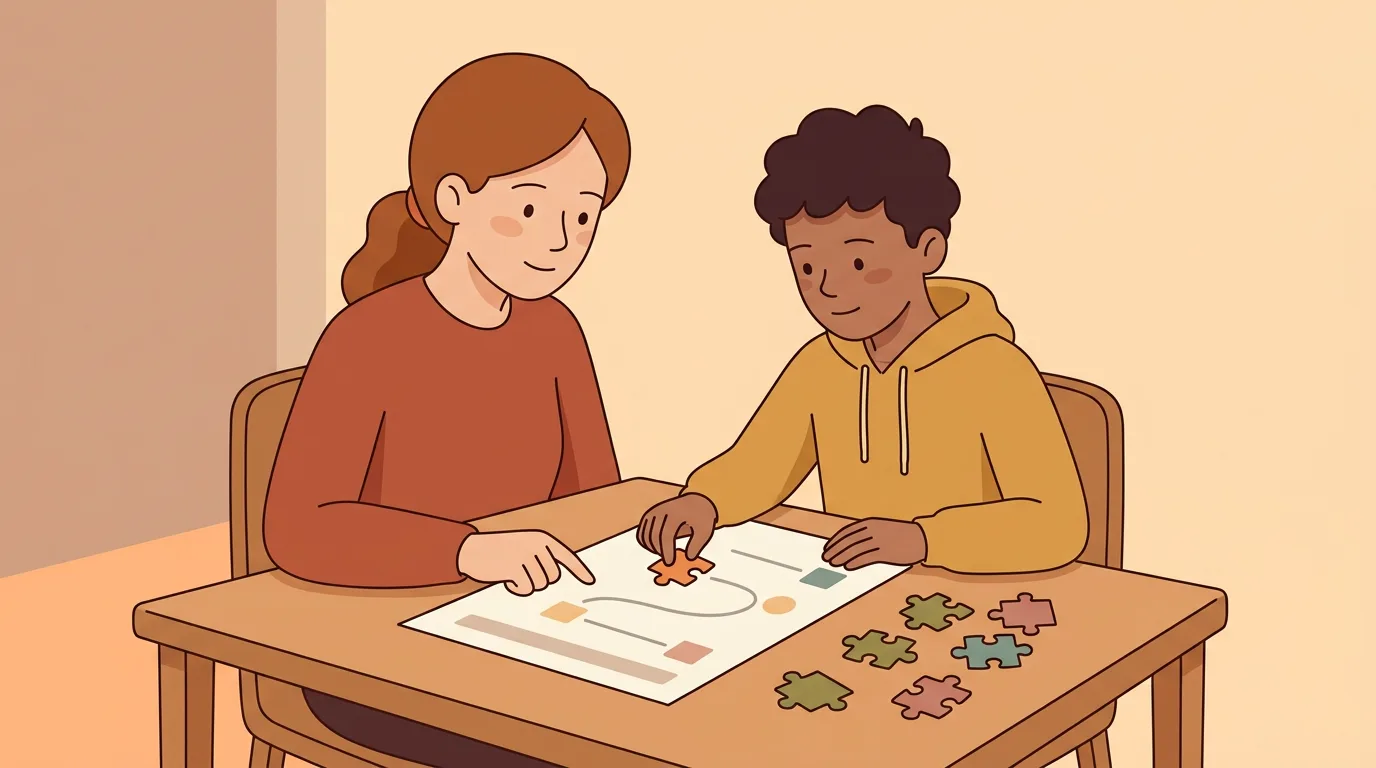
Parents often become most controlling when they are most worried. It is an understandable reflex: email the teacher, cancel the weekend plans, write the revision timetable, stand over the desk. But a child can hear all of that as "the adults do not trust me with my own learning." The result may be more compliance for a week, and less ownership over time.
Autonomy support is not a parent disappearing from the story. It is staying close in a way that leaves the child with a hand on the wheel. "Do you want to read the comments tonight or tomorrow?" "Should I sit beside you, or check in after the first question?" Research grounded in self-determination theory links this kind of home support with stronger motivation, wellbeing, and academic adjustment. The everyday version is a child who feels accompanied, not managed.
Words that keep the door open
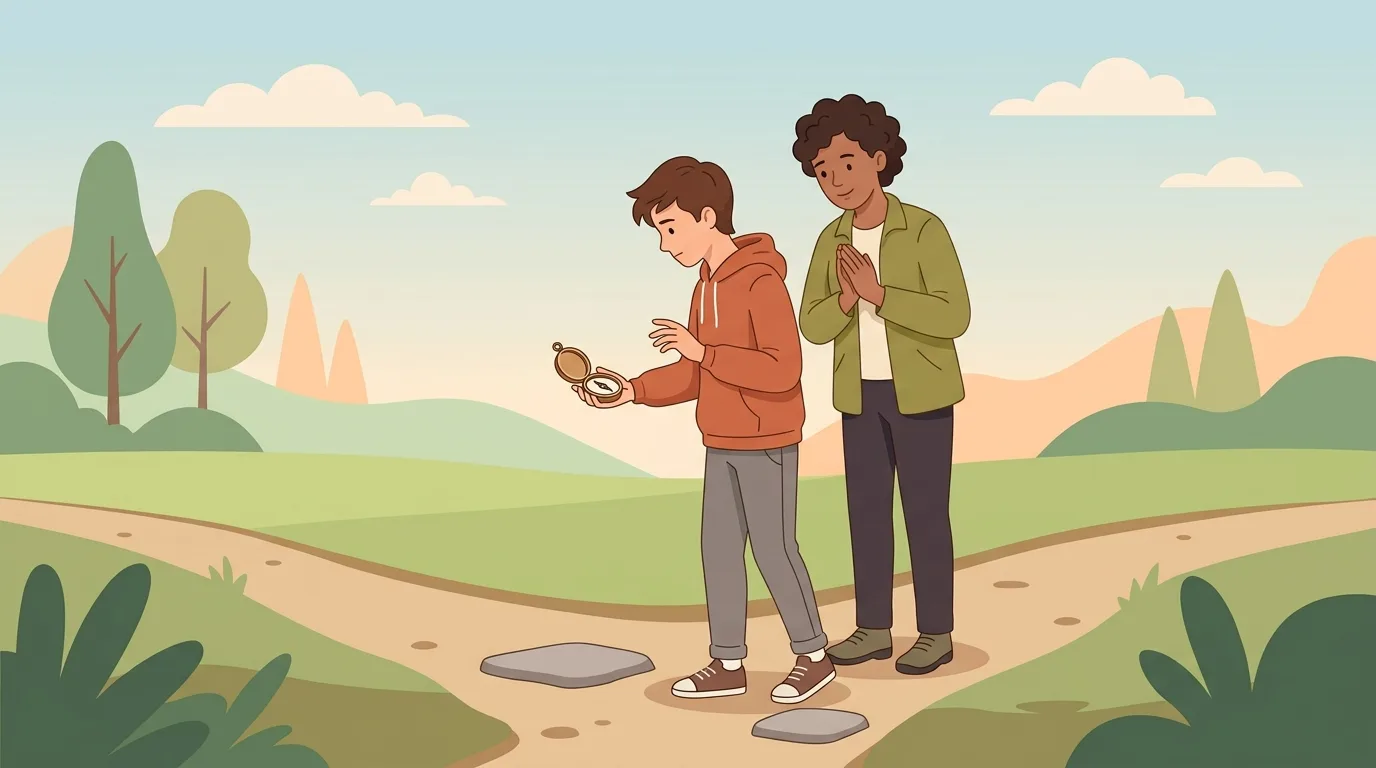
"I can see this one hurt. Come sit for a minute; the mark is not your whole story."
"We do not have to solve it all tonight. When you have some space, we can look for the part that is actually useful."
"You stay in charge of the first move. I can sit with you while you choose it."
The quieter shape of confidence
Confidence after a setback is not swagger. It is not the child insisting they do not care, or the parent trying to cheer the mark out of existence. It is quieter than that. It sounds like a child saying, maybe a day later, "I think I know where I lost it." It looks like coming back to the table without feeling humiliated by needing help.
That is the kind of confidence worth protecting: not "I always get good marks," but "I can be disappointed, understand what happened, and keep moving." mossy is built around the same calmer loop, where students can see their thinking clearly and use feedback without panic.
Further reading
- Child Mind Institute: helping kids handle disappointment
- Stanford Report: Carol Dweck on process praise and perseverance
- Frontiers in Psychology: meta-analysis of educational feedback
- Review of Educational Research: The Power of Feedback
- Educational Psychology Review: parent autonomy support meta-analysis
- PMC: pathways to autonomous student motivation